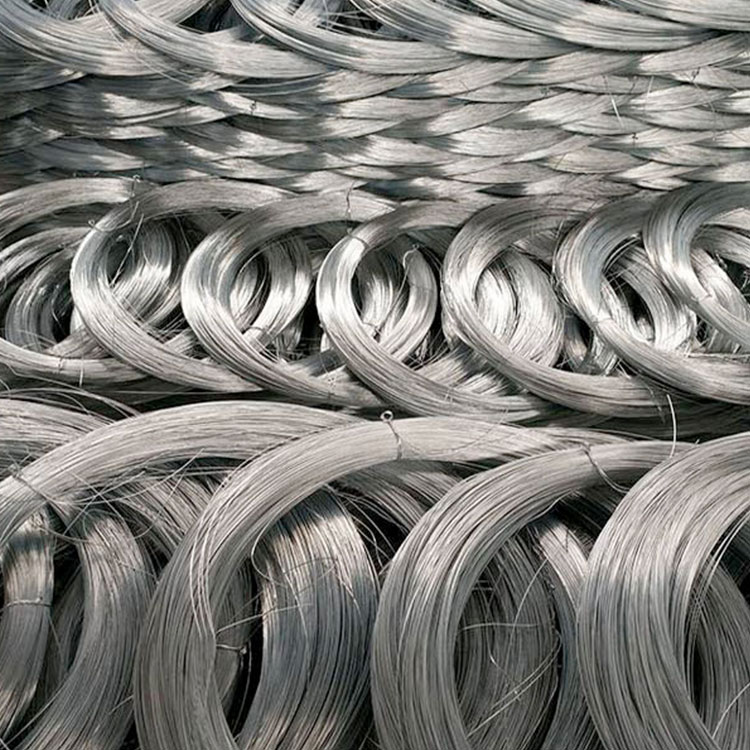
Galvanized wire is divided into hot galvanized wire and cold galvanized wire (electric galvanized wire) difference
2024-05-23

Hot dip galvanizing
Hot dip galvanizing is dipped in the zinc liquid melted by heating, the production speed is fast, the coating is thick but not uniform, the minimum thickness allowed by the market is 45 microns, and the maximum can reach more than 300 microns. The color is dark, the consumption of zinc metal is more, the infiltration layer is formed with the base metal, the corrosion resistance is good, and the hot dip galvanizing can be maintained for decades in the outdoor environment.
Application range of hot dip galvanizing:
Because the resulting coating is thicker, hot-dip galvanizing has better protective properties than electric galvanizing, so it is an important protective coating for steel parts used in harsh working environments. Hot-dip galvanized products in chemical equipment, petroleum processing, Marine exploration, metal structure, power transmission, shipbuilding and other industries have been widely used in the agricultural field such as pesticide irrigation, heating and construction such as water and gas transmission, wire bushing, scaffolding, Bridges, highway guardrail and other aspects, has been widely used.
Cold galvanizing
Cold galvanizing (galvanizing) is in the plating tank through the current one-way to gradually plating zinc on the metal surface, the production speed is slow, the coating is uniform, the thickness is thin, usually only 3-15 microns, the appearance is bright, poor corrosion resistance, generally a few months will rust.
Compared with hot dip galvanizing, the production cost of electric galvanizing is lower.
The difference between cold galvanizing and hot galvanizing:
The difference between cold galvanizing and hot galvanizing is that the amount of zinc is different, and they can be identified from the color, and the color of cold galvanizing is shiny silver white with yellow. Hot dip galvanizing shiny white.
specification
Common specifications of galvanized wire are as follows: [2]
wire gauge size
Hot dip galvanizing is dipped in the zinc liquid melted by heating, the production speed is fast, the coating is thick but not uniform, the minimum thickness allowed by the market is 45 microns, and the maximum can reach more than 300 microns. The color is dark, the consumption of zinc metal is more, the infiltration layer is formed with the base metal, the corrosion resistance is good, and the hot dip galvanizing can be maintained for decades in the outdoor environment.
Application range of hot dip galvanizing:
Because the resulting coating is thicker, hot-dip galvanizing has better protective properties than electric galvanizing, so it is an important protective coating for steel parts used in harsh working environments. Hot-dip galvanized products in chemical equipment, petroleum processing, Marine exploration, metal structure, power transmission, shipbuilding and other industries have been widely used in the agricultural field such as pesticide irrigation, heating and construction such as water and gas transmission, wire bushing, scaffolding, Bridges, highway guardrail and other aspects, has been widely used.
Cold galvanizing
Cold galvanizing (galvanizing) is in the plating tank through the current one-way to gradually plating zinc on the metal surface, the production speed is slow, the coating is uniform, the thickness is thin, usually only 3-15 microns, the appearance is bright, poor corrosion resistance, generally a few months will rust.
Compared with hot dip galvanizing, the production cost of electric galvanizing is lower.
The difference between cold galvanizing and hot galvanizing:
The difference between cold galvanizing and hot galvanizing is that the amount of zinc is different, and they can be identified from the color, and the color of cold galvanizing is shiny silver white with yellow. Hot dip galvanizing shiny white.
specification
Common specifications of galvanized wire are as follows: [2]
wire gauge size
What Is Gi Wire?
HomeMetals & AlloysIron & Iron Products Iron Wire Yongwei Metal